Foam Sheets & Rolls
Quick Specifications
Response within 30 minutes (Mon–Sat, 9 AM–6 PM)
PE Foam Sheets and Rolls for Packaging and Interleaving
Polyethylene foam is a closed-cell, flexible cushioning material that provides impact absorption, surface protection, and vibration damping. Unlike bubble wrap, foam does not have discrete air pockets — the closed-cell structure is uniform, which makes it better for interleaving applications where a consistent thin layer between surfaces is needed, and for products where a foam cut-to-shape insert is required.
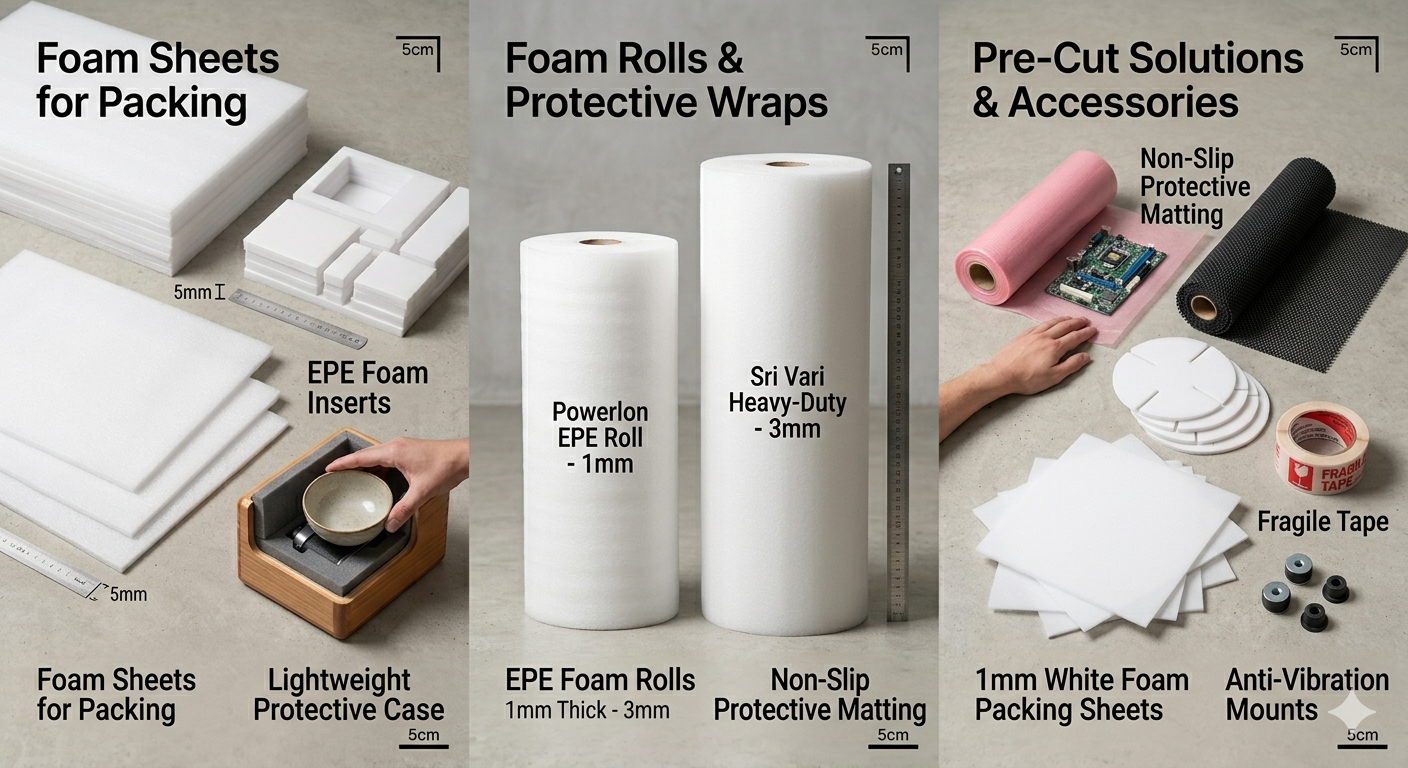
Upackarts supplies PE foam in sheet and roll formats from 2mm to 25mm thickness. Thinner foam (2-5mm) is used for interleaving between flat glass panels, ceramic tiles, metal sheets, and polished stone slabs. Thicker foam (10-25mm) is used for cushioning heavy components, lining wooden crates, and making cut-to-shape inserts.
Key Properties of PE Foam
Closed-cell structure means it does not absorb water or moisture — foam-packed items will not be damaged by condensation or rain exposure during transit. PE foam is chemically inert, meaning it will not react with metal surfaces, painted finishes, or chemical coatings. It is also resistant to most oils and solvents, making it suitable for industrial applications where oil contamination is a risk.
Foam sheets can be easily cut with a knife or scissors to any required shape, which makes on-site customisation straightforward for packaging operations that handle varied product sizes.
Applications in Pune Manufacturing
Glass and ceramics exporters use 3-5mm foam sheets for interleaving between individual tiles and panels during palletised shipment. Electronics manufacturers use 10-25mm foam for custom-cut inserts in component packaging trays. Auto-component manufacturers use foam sheet for protecting machined surfaces from scratch and marking during handling. Furniture manufacturers use foam rolls for wrapping polished and lacquered surfaces before shrink wrapping.
Frequently Asked Questions
What thickness of foam should I use for interleaving glass tiles?
For standard ceramic tiles (10-15mm thick), 3mm foam interleaving is the standard. For thinner glass tiles or mirror glass, 2mm foam is sufficient. For heavy stone or marble tiles, 5mm foam provides better cushioning against edge impact during palletised transit.
Is PE foam reusable?
PE foam can be reused if it is not compressed to the point of crushing the cells. For light-duty applications like interleaving, the foam can typically be reused 3-5 times. For heavy cushioning applications where the foam absorbs significant impact, it should be replaced after use.
Can foam be supplied pre-cut to specific dimensions?
Yes. Pre-cut foam sheets to specified L x W dimensions are available on bulk orders. Custom die-cut shapes for specific product inserts are also available — contact us with your product dimensions and required insert shape.
Get a Bulk Quote
We respond within 30 minutes — Mon to Sat, 9 AM–6 PM.
or