 Guide
Guide
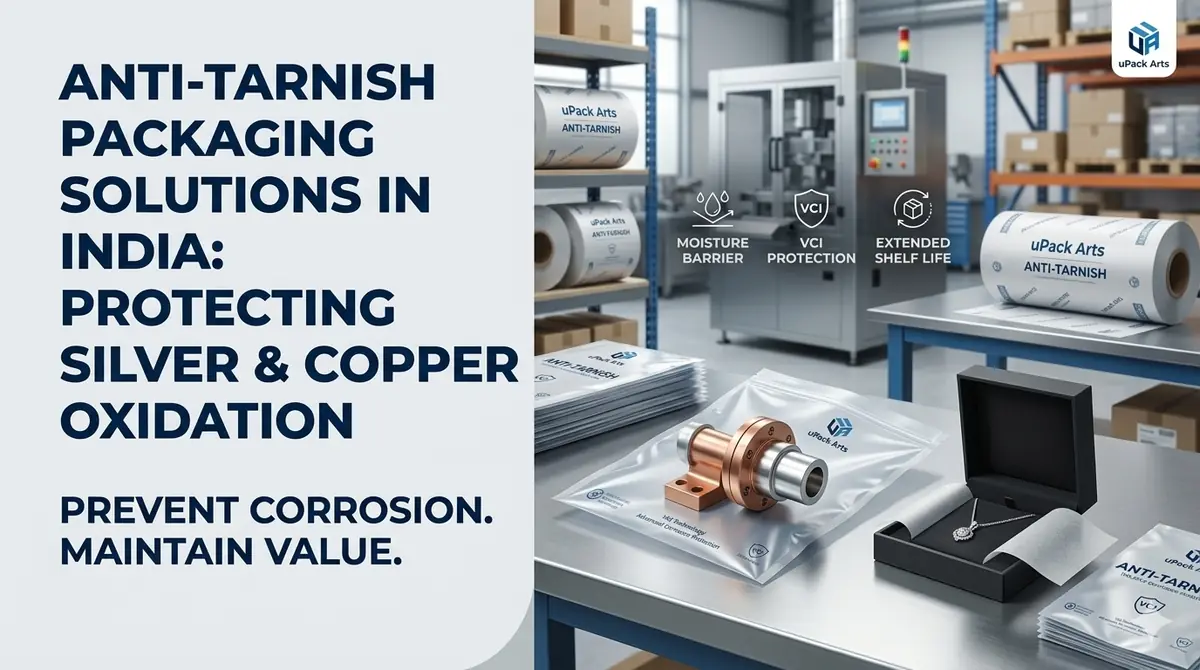
Anti-Tarnish Packaging India: Protecting Silver Jewellery and Copper Components
Tarnishing — the discolouration of silver, copper, and their alloys — is the primary quality complaint in India's jewellery, silverware, and electronic connector industries. Products that leave the factory in pristine condition arrive at the customer tarnished after weeks or months of storage and transit.
The cause is atmospheric chemistry. The fix is packaging chemistry.
---
What Causes Tarnish
Silver Tarnish
Silver tarnish is silver sulphide (Ag2S) — a black compound formed when silver contacts hydrogen sulphide (H2S) in ambient air. H2S is present in typical indoor air at 1 to 10 parts per billion. This concentration, sustained over weeks, is sufficient to create visible tarnish on sterling silver and fine silver surfaces.
Sources that accelerate H2S near stored silver: Natural rubber (rubber bands are the most common cause of silver tarnish in Indian storage), certain wood types (oak, chestnut), industrial and urban air pollution, some kraft papers.
Copper Tarnish
Copper and copper alloys (brass, bronze, copper PCB traces) form copper oxide (CuO, black) and copper carbonate (malachite green) on exposure to oxygen and carbon dioxide in humid air. Copper connectors and PCB traces that tarnish have increased contact resistance — a functional problem, not just cosmetic.
---
Anti-Tarnish Paper Strips — Active H2S Absorption
Anti-tarnish strips contain activated carbon that adsorbs H2S from the enclosed air. By maintaining near-zero H2S concentration inside the storage box or packaging, the chemical reaction that forms silver sulphide cannot occur.
How to Use
One anti-tarnish strip per jewellery box or storage pouch maintains tarnish-free condition for 6 to 12 months under standard indoor air conditions. For areas with higher industrial air pollution (near chemical plants, urban centres): replace every 3 to 6 months.
The strip changes colour from pale yellow to tan or brown when saturated — a visual replacement indicator.
Upackarts Anti-Tarnish Paper Strips: upackarts.in/products/anti-tarnish-paper-strips/
---
Acid-Free Tissue — For Direct Surface Contact
Acid-free tissue paper (pH 7.0 to 8.5) is chemically neutral — it does not contribute to tarnish through its own acidity. Standard tissue paper is mildly acidic from bleaching and contributes to slow tarnishing on direct contact with silver.
For silver jewellery and silverware in storage or transit: always use acid-free tissue for the direct-contact wrap, regardless of what anti-tarnish strips are used in the package.
Upackarts Tissue Wrapping Paper: upackarts.in/products/tissue-wrapping-paper/
---
VCI Packaging for Copper Electronic Components
For copper-plated PCB contacts, copper busbars, copper terminals, and copper electrical connectors: VCI packaging provides active corrosion protection against both oxidative and sulphide tarnish.
VCI compounds adsorb onto copper surfaces from the vapour phase and block the electrochemical reactions that cause oxidation. Copper connectors sealed in VCI bags maintain low contact resistance for 12 to 24 months storage.
Upackarts VCI Rust Preventive Paper: upackarts.in/products/vci-rust-preventive-paper/
---
Complete Anti-Tarnish System for Indian Jewellery Export
For silver jewellery exported from India to humid destinations (Southeast Asia, Middle East, Europe):
1. Individual piece: Acid-free tissue direct contact wrap.
2. Piece packaging: Anti-tarnish strip inside the jewellery box.
3. Master pack: Sealed aluminium foil bag with anti-tarnish strips and silica gel desiccant.
4. Outer: Standard corrugated export shipper box.
This system maintains tarnish-free condition through 30+ day sea freight transit and extended retail storage at the destination.
---
Frequently Asked Questions
How long do anti-tarnish strips protect silver?
In standard indoor air: 6 to 12 months per strip. Near industrial areas with higher H2S: 3 to 6 months. The strip colour change (pale yellow to tan) indicates when replacement is needed.
Can rubber bands cause silver tarnish in India?
Yes. Rubber bands are one of the most common causes of silver tarnish in Indian jewellery storage. Natural rubber releases sulphur compounds that directly tarnish silver on contact. Never store silver jewellery with rubber bands — use cotton thread, cloth ties, or paperclips for bundling.
Do anti-tarnish strips work for copper PCB connectors?
Anti-tarnish strips primarily target hydrogen sulphide — the compound that tarnishes silver. Copper tarnish is more broadly driven by oxygen and moisture. For copper electronic components, VCI packaging (which provides active protection against oxidative corrosion) is more effective than anti-tarnish strips alone.
Need Packaging for Your Business in Pune?
Bulk corrugated boxes, wooden crates, and custom packaging at the best prices. Response in 30 minutes.
Related Articles



Get a Quick Quote
Tell us your requirement. Response in 30 minutes.
Request Quote WhatsApp Now- ✔ Reply in 30 minutes
- ✔ GST Invoice included
- ✔ Bulk pricing available
- ✔ Same-day dispatch, Pune