 Guide
Guide
Solar Panel Packaging India: Export and Domestic Shipping Guide
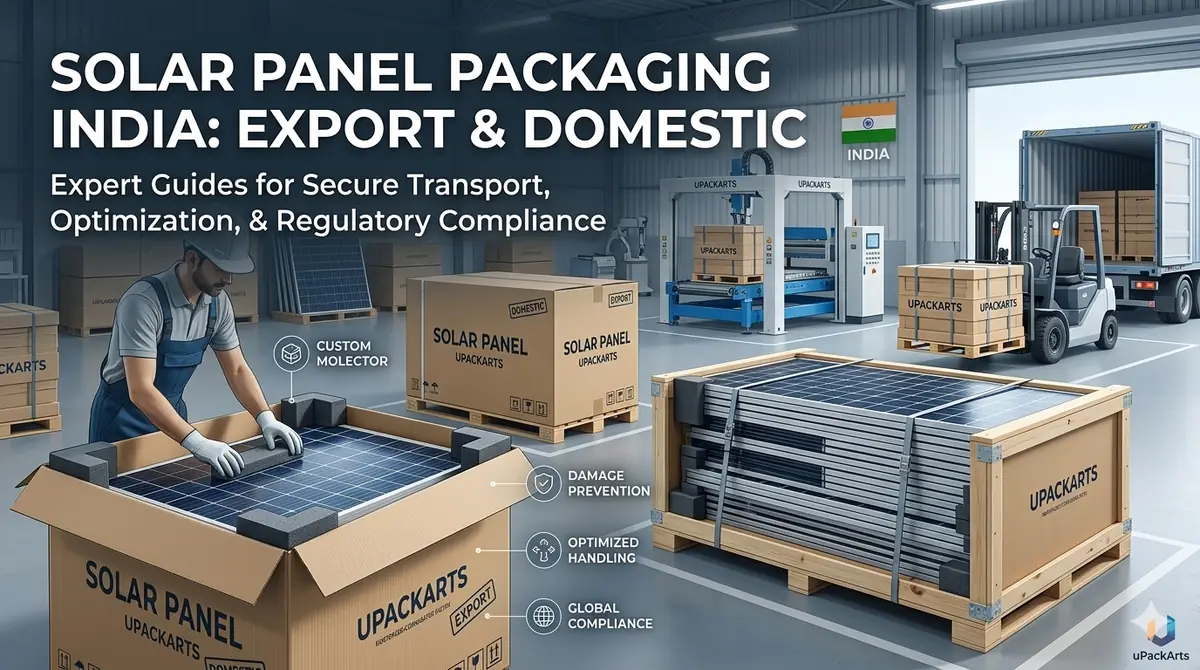
India's solar manufacturing capacity expanded significantly under the PLI scheme — and solar panel packaging requirements are specific and non-trivial. Glass-faced panels measuring 1.7m x 1.1m with aluminium frames are fragile at the glass surface, vulnerable at the frame corners, and heavy enough to create significant stacking loads.
---
The Three Damage Failure Modes
Glass face micro-crack: Micro-cracks from point contact pressure during transport are invisible to visual inspection but create hot spots in service that degrade panel performance and eventually cause premature failure. The cause: direct contact between the panel glass face and any hard, non-conformable surface.
Frame corner impact damage: Aluminium frame corners are vulnerable to denting and bending on drop impact. Bent corners prevent flush installation in the racking system.
Cell cracking from inadequate stacking protection: In transit, panels stacked without adequate inter-panel protection transfer compressive loads directly to the glass face — causing cell cracking.
---
Inner Panel Protection
Glass face: Foam sheet (10 to 15mm EPE) between each panel in a stack, covering the full panel face area. Never stack glass face to glass face without full-coverage foam interleaving. The foam distributes compressive load across the full glass face, preventing point contact.
Upackarts Foam Sheets and Rolls: upackarts.in/products/foam-sheets-rolls/
Frame corners: Foam corner protectors (100x100x100mm) on all four frame corners. The aluminium frame corner is the most vulnerable point on a solar panel to drop damage.
Upackarts Foam Corner Protectors: upackarts.in/products/foam-corner-protectors/
Frame edges: Foam edge protectors on all four frame edges for export crating where panels are stacked and strapped.
Upackarts Foam Edge Protectors: upackarts.in/products/foam-edge-protectors/
---
Domestic Shipping Stack Configuration
For domestic truck transport: vertical stacking (panels standing on edge in A-frame configuration) with foam sheets between panels. A-frame prevents compressive load on glass faces from gravity — loads are taken by the frame edges.
Horizontal stacking (flat): acceptable up to 30 panels with full-face foam interleaving and rigid foam/plywood top layer to distribute any point loads.
---
Export Sea Freight Crating
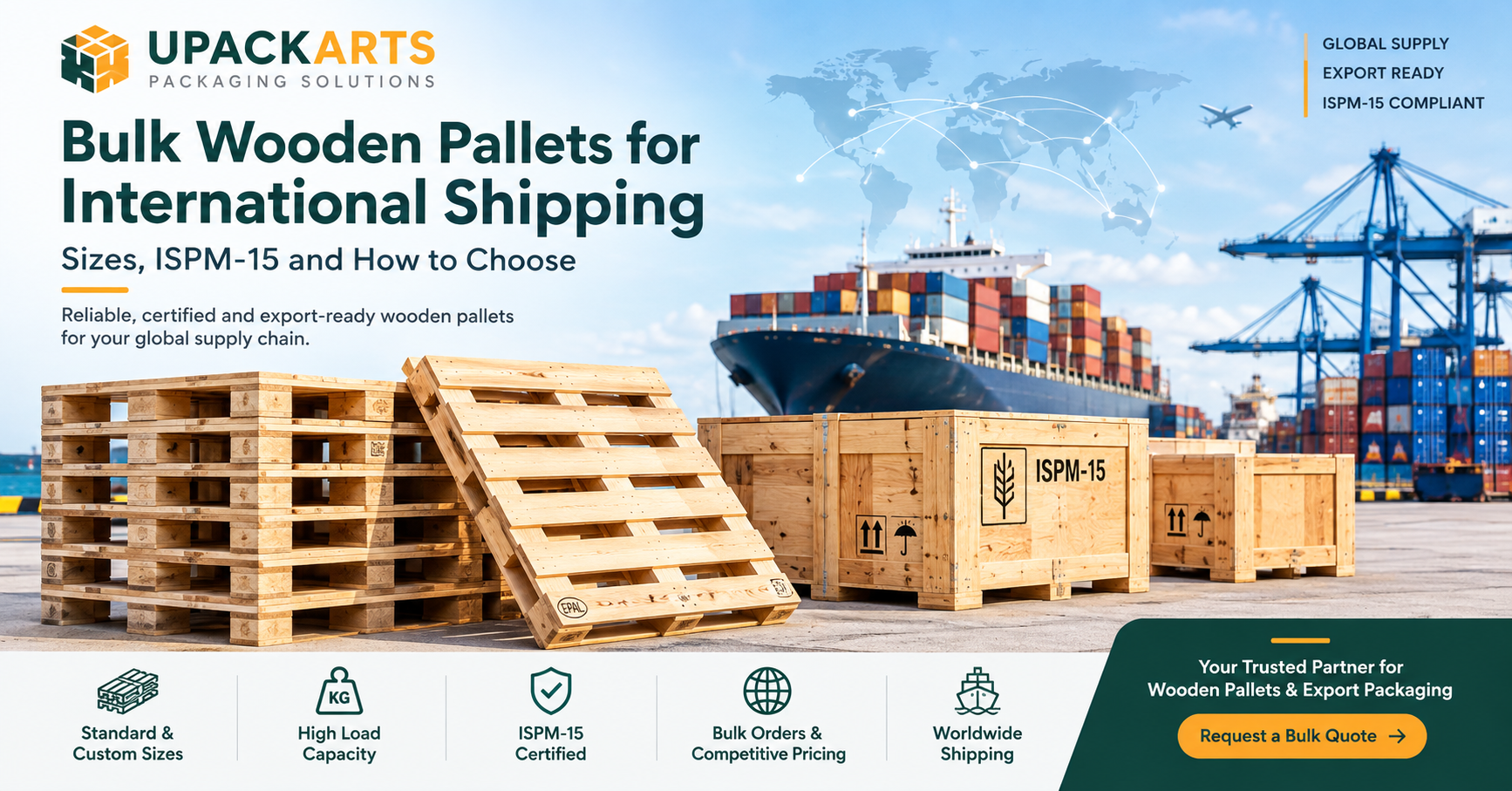
Export solar panels require ISPM-15 certified wooden crates for sea freight. Standard export configuration:
Wooden pallet base (ISPM-15 certified).
Vertical A-frame wooden structure with foam-lined internal faces.
Panels loaded in A-frame orientation with foam interleaving.
VCI foam edge protection on frame edges (frame aluminium can tarnish in high-humidity ocean transit).
Silica gel desiccant packs inside the sealed crate for moisture control.
HDPE stretch film over the entire crate assembly before wooden outer panels are nailed.
Upackarts Wooden Export Crates: upackarts.in/products/wooden-export-crates/
Upackarts Silica Gel Packets: upackarts.in/products/silica-gel-packets-packaging/
Upackarts Stretch Film: upackarts.in/products/stretch-film/
---
IEC 61215 Mechanical Load Requirements
IEC 61215 (the standard for crystalline silicon PV module design qualification) includes mechanical load testing that specifies the minimum packaging robustness for commercial solar panels. The standard's transportation and packaging annex specifies acceptable drop heights and vibration profiles.
Packaging systems for solar panels exported to European and US markets are often required to demonstrate compliance with IEC 61215 transportation test protocols — the packaging system used in the type approval test must match the commercial packaging.
---
Frequently Asked Questions
What foam thickness should I use between solar panels in a transport stack?
10 to 15mm EPE foam sheet for domestic road transport. 15 to 20mm for sea freight export where vibration duration is much longer. The foam must cover the full panel glass face area — partial coverage leaves uncovered glass areas that will show contact damage.
Can I use bubble wrap instead of foam sheet for solar panel face protection?
No. Bubble wrap leaves bubble imprint patterns on solar glass faces under sustained compression during transit — particularly in sea freight. EPE foam sheet provides uniform surface contact without imprint marks. Always use flat EPE foam sheet for solar glass face protection.
How many panels can I stack horizontally without risking glass cracking?
Maximum 25 to 30 panels in a flat stack with 15mm EPE foam interleaving between each panel and a rigid foam/plywood distribution layer on top. Above 30 panels: the cumulative compressive load exceeds what foam interleaving can safely distribute. Use A-frame vertical orientation for stacks above 30 panels.
Need Packaging for Your Business in Pune?
Bulk corrugated boxes, wooden crates, and custom packaging at the best prices. Response in 30 minutes.
Related Articles
Get a Quick Quote
Tell us your requirement. Response in 30 minutes.
Request Quote WhatsApp Now- ✔ Reply in 30 minutes
- ✔ GST Invoice included
- ✔ Bulk pricing available
- ✔ Same-day dispatch, Pune