 Guide
Guide
HDPE Tarpaulin India: Protecting Cargo on Open Trucks and Outdoor Storage
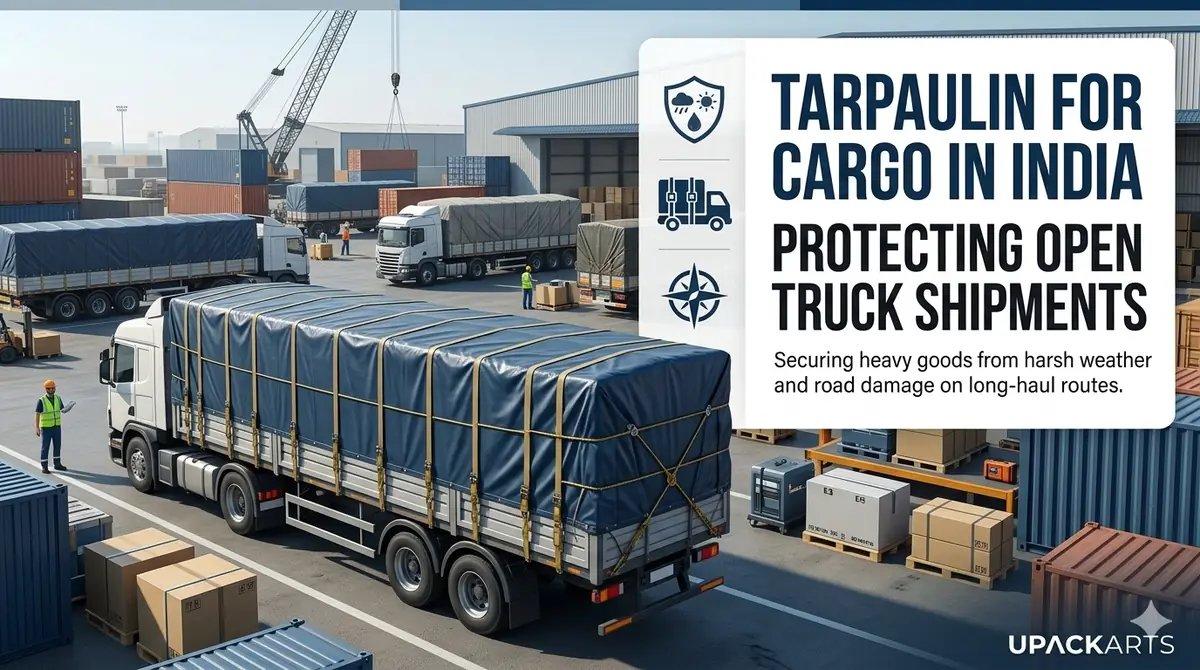
India's logistics sector moves a significant percentage of freight in open-body trucks — covered by tarpaulin rather than enclosed containers. The tarpaulin is the only barrier between the cargo and rain, dust, sun, and wind at highway speeds.
A tarpaulin failure during monsoon transit can damage an entire truck load. Getting the right tarpaulin specification for each application prevents this.
---
GSM Selection Guide
GSM (grams per square metre) determines tarpaulin weight and thickness, which determines tear resistance, UV life, and weather protection.
75 to 90 GSM: Light duty. For covering cargo in dry season only. Short transit under 200 km. Not suitable for sustained wind loads at highway speed or any rain exposure.
120 to 150 GSM: Standard industrial. The correct choice for most Indian road freight tarpaulin applications. Handles highway wind loads, light to moderate rain. UV stabilised for 1 to 2 years outdoor life.
180 to 200 GSM: Heavy duty. For repeated-use tarpaulins on regular routes. Monsoon season freight, coastal routes, and cargo requiring extended outdoor coverage.
250 GSM+: Premium heavy duty. For long-term outdoor storage and regular high-wind or coastal exposure.
Upackarts HDPE Tarpaulin Sheets: upackarts.in/products/hdpe-tarpaulin-sheets/
---
HDPE vs Canvas Tarpaulin
HDPE woven tarpaulin: Lighter per GSM than canvas. Waterproof (not just water-resistant). Will not mildew. Lower cost. Correct choice for almost all Indian cargo protection applications.
Canvas (cotton duck) tarpaulin: Heavy, breathable, traditional. Allows moisture vapour exchange — prevents condensation under the cover. Correct for loads where condensation beneath the cover is a problem (freshly processed food, hot machinery). Much heavier and more expensive than HDPE.
For standard cargo protection in India: HDPE tarpaulin is the correct specification.
---
UV Stabilisation
Unstabilised HDPE becomes brittle and cracks under UV exposure within 3 to 6 months in Indian sun conditions. UV-stabilised HDPE tarpaulin (which contains UV absorber additives) maintains strength and flexibility for 1 to 3 years of outdoor use depending on GSM and UV additive loading.
Check: UV-stabilised tarpaulins are specified in years of expected outdoor life (1 year, 2 year, 3 year). Standard agricultural and construction tarpaulins in India are often 6-month or 1-year UV grade. For regular logistics use: specify 2-year minimum UV grade.
---
Grommet Spacing and Lashing
Standard grommet spacing: 1 metre between grommets on all sides. For tarpaulins that must be secured at multiple points to resist highway wind loads: the lashing rope or bungee runs from grommet to truck side ring at each 1 metre point.
Wind loading calculation: At 80 km/h highway speed, wind pressure on a 3m x 6m tarpaulin covering an open truck body is approximately 600 to 900 N (60 to 90 kg force). Each grommet must withstand its share of this force. Standard steel grommets on 120+ GSM tarpaulin: rated 100 to 200 kg — more than sufficient for highway applications.
---
Monsoon Season Protocol
Rain penetration through tarpaulin occurs at two points: through worn or mechanically damaged areas, and through unsealed edges and overlaps.
Edge sealing: All tarpaulin edges covering open cargo must overlap the truck body sides by a minimum of 30cm and be secured at the bottom grommet points. Unsecured edge flap allows rain to be driven under the tarpaulin at highway speed.
Overlap at joins: Where two tarpaulins must be joined to cover a longer load, overlap by 60cm minimum with the forward (wind direction) tarpaulin on top — so rain runs over the overlap, not under it.
Combined with: HDPE poly liner inside corrugated boxes for moisture-sensitive contents: upackarts.in/products/hdpe-poly-bags/
---
Frequently Asked Questions
What GSM tarpaulin should I use for monsoon season truck freight in Maharashtra?
180 to 200 GSM UV-stabilised HDPE tarpaulin for regular monsoon season freight. 120 to 150 GSM is acceptable for the dry season but is under-specified for sustained monsoon rain at highway speed. The additional cost of 180 GSM vs 120 GSM is typically Rs. 200 to Rs. 600 per tarpaulin — justified by preventing one damaged load.
How do I prevent tarpaulin from tearing at grommets?
Grommet tears occur when the tarpaulin is not properly secured and wind loads concentrate at individual grommets. Prevent by: securing ALL grommets, not just corner ones; maintaining correct overlap so edge flap does not create additional wind load; using grommet reinforcement patches at known stress points on regularly reused tarpaulins.
Can HDPE tarpaulin be used for long-term outdoor storage in India?
Yes with the correct UV grade: 2 to 3 year UV-stabilised HDPE tarpaulin for outdoor storage. For storage beyond 3 years: inspect annually for UV degradation (cracking, loss of flexibility) and replace before mechanical failure. In coastal areas with salt spray: HDPE outperforms canvas for long-term outdoor storage as it is salt-resistant and will not mildew.
Need Packaging for Your Business in Pune?
Bulk corrugated boxes, wooden crates, and custom packaging at the best prices. Response in 30 minutes.
Related Articles

Get a Quick Quote
Tell us your requirement. Response in 30 minutes.
Request Quote WhatsApp Now- ✔ Reply in 30 minutes
- ✔ GST Invoice included
- ✔ Bulk pricing available
- ✔ Same-day dispatch, Pune