 Guide
Guide
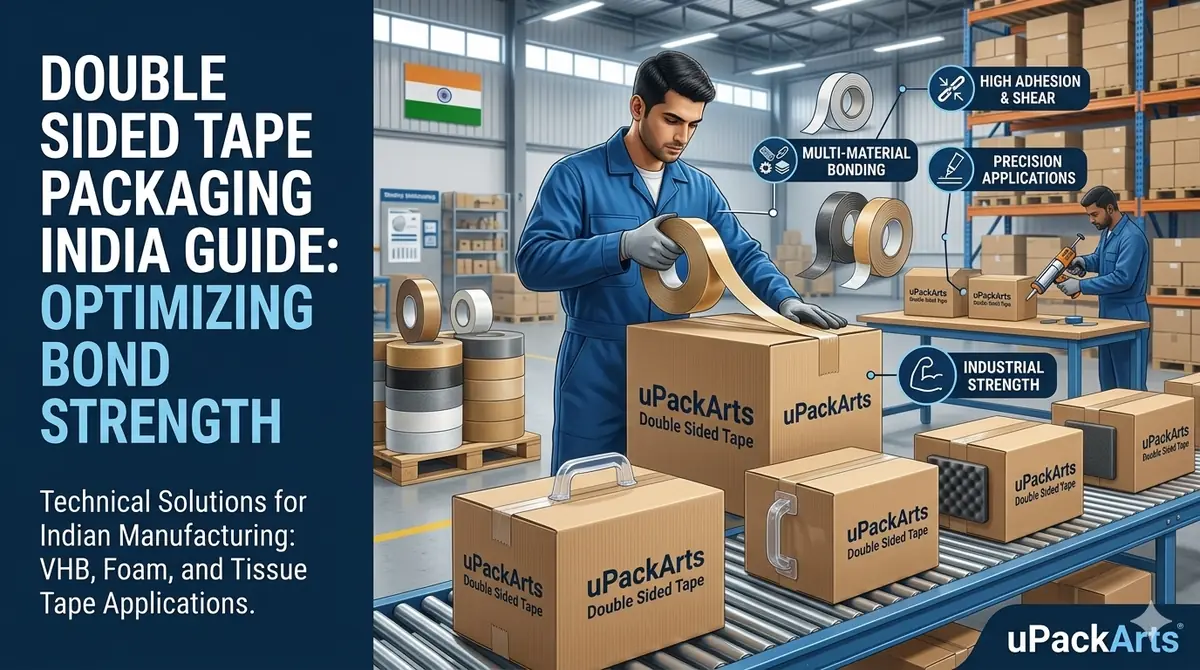
Double Sided Tape for Packaging India: Types, Applications and Buyer Guide
Double sided tape is one of the most underspecified consumables in Indian packaging operations. Most businesses order generic double sided tape without specifying carrier type, adhesion grade, or width — and end up with tape that either fails at the bond line or is nearly impossible to remove when needed.
This guide covers the key specifications and helps you select the right double sided tape for each packaging application.
---
The Two Carrier Types
Double sided tape is manufactured by coating adhesive on both sides of a carrier material. The carrier type determines the tape's profile, flexibility, and gap-filling capability.
Tissue Carrier Double Sided Tape
Tissue carrier tape uses a thin tissue paper between two adhesive layers. The result is extremely thin — nearly invisible once bonded. The total thickness is typically 0.10 to 0.15mm.
Best for: Paper-to-paper bonding where a flush, invisible bond is needed. Carton inner flap sealing. Label mounting where the tape must not create a visible raised edge. Bonding lightweight foam (up to 5mm) to flat corrugated surfaces.
Not suitable for: Surfaces with gaps, irregular texture, or where vibration resistance is needed. The thin carrier provides no gap-filling capability.
Foam Carrier Double Sided Tape
Foam carrier tape uses an expanded polyethylene or polyurethane foam layer as the carrier. Total thickness: 0.5mm to 3mm depending on grade.
The foam layer fills surface gaps, provides vibration damping, and creates a conformable bond that maintains contact pressure on slightly uneven surfaces.
Best for: Bonding foam inserts to corrugated box walls (the standard application in protective packaging). Mounting rubber gaskets and seals. Applications where the surfaces being bonded are not perfectly flat. Bonding foam corner protectors and edge protectors in position.
Upackarts Double Sided Tape: upackarts.in/products/double-sided-tape/
---
Permanent vs Removable Adhesion
Permanent Grade
The bond creates substrate failure before adhesive failure — meaning if you pull the bonded surfaces apart, the substrate (paper, foam, or corrugated) tears before the adhesive releases. This is the correct grade for final assembly where the bond is never meant to be reversed.
Removable Grade
Within 72 hours of application at room temperature, the bond can be peeled cleanly without adhesive residue. Beyond 72 hours, the adhesive builds additional tack and removal becomes progressively harder.
Use removable grade for temporary positioning, display mounting, and applications where the bond may need to be reversed for inspection or quality control.
---
Width Selection Guide
12mm: Narrow sealing and positioning. For foam corner protectors (25x25mm) — one strip per face.
18mm: General purpose bonding. For most carton flap sealing and small foam lamination.
24mm: Foam insert bonding to corrugated walls (the most common packaging application). Provides sufficient contact area for foam up to 50mm thick.
48mm: Wide area lamination and heavy foam bonding. For lining all six faces of corrugated boxes with 25mm+ foam.
---
Key Packaging Applications
Bonding Foam Inserts Inside Corrugated Boxes
The most important packaging use of double sided tape. When foam sheet or foam corner protectors are placed inside a corrugated box without bonding, they shift during transit and the product loses protection.
Double sided foam tape applied to the foam surface, then pressed against the corrugated box wall, holds the foam firmly in position throughout transit. Use 24mm foam carrier tape for foam up to 50mm thick.
Inner Carton Flap Sealing
For premium product packaging where the inside of the box should have no visible tape, double sided tissue tape applied to inner flap edges creates a clean sealed closure without the appearance of brown BOPP tape on the interior.
Label and Pouch Mounting
Packing list document pouches on the outside of cartons can be secured with double sided tape at the bottom edge, supplementing or replacing the pouch's own adhesive backing on cold or porous corrugated surfaces.
Upackarts Packing List Document Pouches: upackarts.in/products/packing-list-document-pouches/
---
Frequently Asked Questions
What is the difference between double sided tape and double sided foam tape?
Double sided tape has a flat carrier (tissue, paper, or film) between two adhesive layers — very thin, flush bond. Double sided foam tape has a foam carrier that fills gaps and provides vibration damping — thicker, used where surfaces are not perfectly flat. For bonding foam inserts to corrugated box walls, always use foam carrier double sided tape.
How do I prevent foam inserts from shifting inside packaging boxes?
Apply 24mm or 48mm double sided foam tape to the foam face that contacts the box wall. Press firmly for 5 seconds. The foam-to-foam bond at the tape interface holds the insert firmly in position even under transit vibration and handling impacts. Without bonding, even well-cut foam inserts shift during extended road freight.
Can double sided tape be used on recycled corrugated surfaces?
Standard double sided tape adhesion is lower on recycled corrugated surfaces due to higher porosity and surface dust. Use high-tack permanent grade for recycled corrugated. Clean the surface before application to remove dust, which is the most common cause of adhesion failure on recycled board.
Need Packaging for Your Business in Pune?
Bulk corrugated boxes, wooden crates, and custom packaging at the best prices. Response in 30 minutes.
Related Articles
Get a Quick Quote
Tell us your requirement. Response in 30 minutes.
Request Quote WhatsApp Now- ✔ Reply in 30 minutes
- ✔ GST Invoice included
- ✔ Bulk pricing available
- ✔ Same-day dispatch, Pune